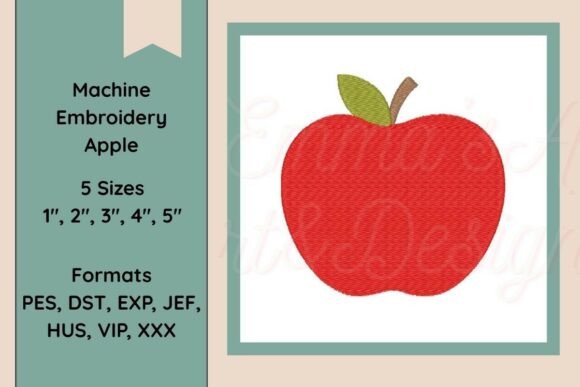
Machine Embroidery Apple
A Designer’s First Look: Clean, Confident, and Classically School-Ready
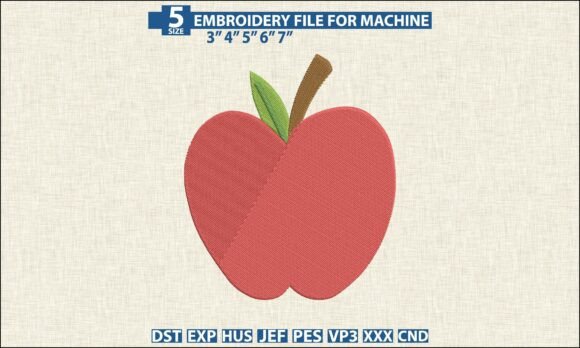
When I opened the Machine Embroidery Apple file, my first thought wasn’t “cute” — it was “usable.” That’s rare. So many school-themed designs lean into cartoonish exaggeration or overly busy details, but this one lands with quiet confidence: a balanced, slightly stylized apple shape, crisp outline, and thoughtful negative space. It doesn’t shout — it invites. The curvature feels natural, not stiff; the stem is subtle but present; the leaf has gentle taper and flow. This isn’t just an embroidery file — it’s a visual shorthand for warmth, care, and approachability. Perfect for a Back To School collection that wants to feel handmade, not mass-produced.
Real Project Test: Stitching It onto a Teacher Tote Bag
Last week, I used the Machine Embroidery Apple on a natural canvas tote for a local teacher appreciation pop-up. We paired it with soft navy thread on off-white fabric — no appliqué, just clean satin and fill stitch execution. The result? Instant recognition without clutter. Parents paused at the booth, smiled, and said, “That’s *her* — she loves apples, and she teaches third grade.” That kind of emotional resonance matters. It turned a generic tote into a personalized gift, not just a promotional item. The design scaled beautifully at 3.8 inches wide — large enough to read from across a hallway, small enough to sit cleanly on a pocket or side panel. No puckering, no thread nesting, and the leaf held its shape even on the slight curve of the tote’s gusset.
Where It Shines (and Where to Pause)
The Machine Embroidery Apple excels in projects where clarity and charm matter more than complexity:
- Custom apparel: Works flawlessly on sweatshirt cuffs, t-shirt chest placements, and baby onesies — especially when you want gentle symbolism over loud graphics.
- Embroidered patch: Clean edges and moderate stitch density make it ideal for iron-on or sew-on patches on backpacks, jackets, or classroom supply caddies.
- Tote bag design and kitchen towel embroidery: Its open layout avoids heaviness, so it breathes on linen, cotton duck, and medium-weight weaves.
- Nursery decor and holiday embroidery: Surprisingly versatile — swap thread colors to shift from back-to-school reds to autumn rust or spring green for Easter or teacher birthdays.
But be thoughtful in these situations:
- Small hoop sizes: If your hoop is under 4x4", test the smallest recommended size first — fine leaf detail may soften or lose definition.
- Textured or stretchy fabric: On jersey or slubbed linen, use cutaway stabilizer and reduce top tension slightly. The design’s smooth curves respond well — but only if the base stays stable.
- Dark fabric: The original file reads best with high-contrast thread. If stitching on black or navy, avoid pale yellow or cream — go for mustard, forest green, or deep burgundy to preserve legibility.
- Curved surfaces like caps: The apple’s rounded form adapts better than angular logos, but avoid placing it too close to the bill seam where distortion can pull the stem or leaf out of proportion.
What It Adds to Your Handmade Product — Beyond the Stitch
As a designer who sells digital embroidery files and consults with Etsy sellers, I watch how a single machine embroidery design influences buyer trust. The Machine Embroidery Apple elevates perceived value because it looks intentional — not auto-traced or oversimplified. Customers notice that. When stitched on a handmade apron for a new teacher, it signals care in selection, not just convenience. On a boutique-branded tea towel, it supports brand consistency: friendly, grounded, quietly professional. And for craft fair shoppers? It’s gift-ready. No explanation needed. Just an apple — familiar, warm, and unmistakably meaningful in a school context.
Practical Notes Every Embroidery Designer Should Check
Before adding the Machine Embroidery Apple to your next craft business launch or client project, do these five things:
- Test on scrap fabric — same type and weight as your final piece, with the exact stabilizer you plan to use.
- Review stitch density in your editing software. If it’s dense in the apple’s center, consider lightening fill stitch % by 5–8% for lightweight fabrics.
- Confirm hoop size — don’t assume compatibility. Check the file’s native dimensions before loading into your machine.
- Inspect small details in zoom view: Is the leaf tip sharp? Does the stem taper cleanly? These define polish.
- Test licensing — if you’re selling finished products or reselling the digital embroidery file, verify commercial use rights. Never assume.
Also: try a black-and-white printable mockup first. See how it reads without color — because sometimes, the strongest part of a machine embroidery design is its silhouette.
Final Thought: A Quiet Workhorse for Meaningful Making
The Machine Embroidery Apple won’t wow with flash, but it earns respect through reliability, adaptability, and emotional intelligence. It fits seamlessly into custom apparel, personalized gift lines, and small shop product collections — especially those rooted in education, care, and community. For Etsy sellers building seasonal collections or apparel decorators sourcing clean, scalable assets, it’s a low-risk, high-return addition. Not every embroidery project needs fireworks. Sometimes, what your customers — and your own standards — truly need is one well-drawn, thoughtfully stitched apple.