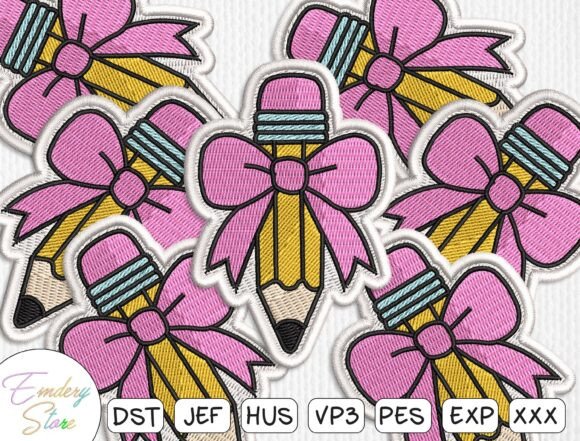
School Supplies Patch Embroidery File
A Playful, Professional First Impression
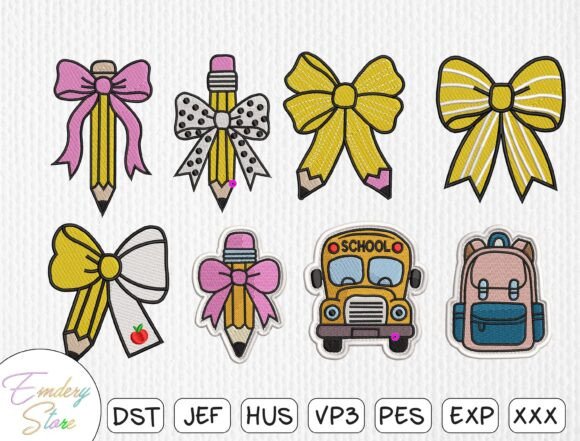
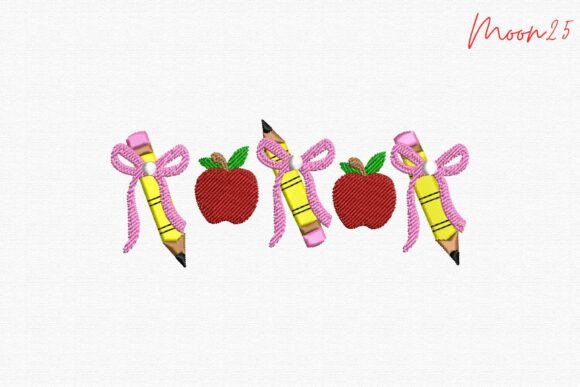
As an embroidery designer who’s reviewed thousands of digital embroidery files for small business use, my first impression of the School Supplies Patch Embroidery File is immediate and positive: it reads as friendly, intentional, and commercially viable—not just “cute” but strategically charming. The description—“cute pencil designs decorated with big bows in a playful cartoon style”—signals clarity of audience and purpose. It doesn’t try to be sleek corporate or vintage-minimalist. Instead, it leans into warmth, approachability, and lighthearted professionalism—ideal for businesses that want to feel human, creative, and community-minded.
Real-World Use Across Small Business Merchandise
This machine embroidery design shines where personality meets practicality. Imagine a local bakery launching a “Back-to-School Breakfast Box” campaign—stitching the pencil-with-bow motif onto canvas tote bags handed out with orders. Or a handmade florist adding a tiny embroidered patch to denim aprons for staff during school fair pop-ups. A pet brand could subtly embroider it on leash tags or bandana edges for “Teacher Appreciation Week” collabs. Even a boutique coffee shop might use it as a chest accent on barista aprons—small enough to read, bold enough to charm.
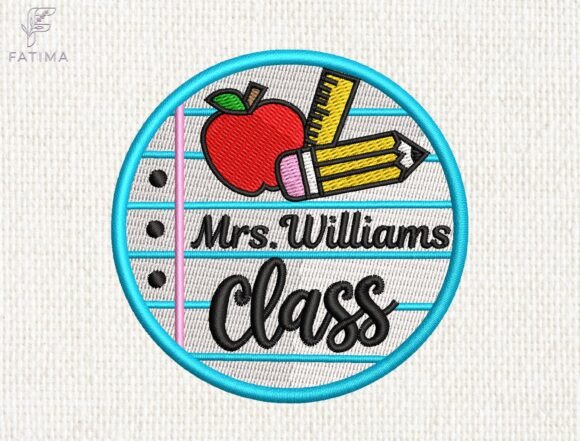
The School Supplies Patch Embroidery File works especially well for embroidered patch applications: sewn-on or iron-on patches for uniforms, tote bags, caps, and product packaging. Its cartoon clarity holds up at 2–3 inches wide—the sweet spot for cap fronts, sleeve details, and boutique merchandise labels. Because it avoids fine linework or dense fill areas (based on its described style), it translates reliably across fabric types—from cotton twill aprons to structured trucker caps—and supports consistent commercial embroidery runs without excessive thread breaks or re-hooping.
Where to Use It Thoughtfully
Like any digital embroidery file, the School Supplies Patch Embroidery File demands context-aware execution. Avoid scaling it below 1.5 inches—those big bows and pencil outlines need breathing room to retain legibility and stitch integrity. On highly curved surfaces like baseball cap fronts, test placement carefully: the bow’s volume may distort if hooped too aggressively. Dark uniforms (navy, charcoal, black) require high-contrast thread colors; consider white, lemon yellow, or mint green fills against deep backgrounds to maintain visibility.
Also watch for stitch density: while the description suggests simplicity, always verify actual fill coverage before bulk production. Dense satin-stitched bows on lightweight fabrics can stiffen or pucker—especially on delicate items like kids’ backpack straps or linen tea towels. And if your small business uses textured fabric (burlap, heavy canvas, or quilted cotton), add cutaway stabilizer underneath to prevent shadowing or thread pull-through.
How It Strengthens Brand Identity and Customer Trust
For small business owners, every stitched detail contributes to perceived value—and the School Supplies Patch Embroidery File delivers subtle credibility. Its cohesive, hand-drawn charm signals care and craft, reinforcing a handmade product ethos without sacrificing polish. When customers see this design on an apron at a creative studio or stitched beside a logo on a tote bag, it quietly communicates alignment with education, growth, creativity, and everyday joy—not just transactional branding.
That resonance builds recognition and emotional connection. Teachers recognize it instantly. Parents smile at the nostalgia. Kids point. That shared visual language makes your custom apparel more memorable—and more likely to be worn, shared, and photographed. In turn, that boosts organic reach for Etsy sellers, local boutiques, and craft-based brands relying on word-of-mouth and social proof.
Practical Embroidery Designer Notes Before You Stitch
Before committing to production, here’s what I always do—and recommend you do—with the School Supplies Patch Embroidery File:
- Test in black and white first—verify clean outlines and balanced negative space without color distraction.
- Check minimum viable size: resize to your target patch dimensions (e.g., 2" x 2") and inspect stitch definition on screen and in software preview.
- Review thread color contrast on your intended fabric—especially for light-on-light or dark-on-dark combos.
- Inspect spacing between elements: ensure bows don’t bleed into pencil shafts at smaller scales.
- Confirm hoop size compatibility—does it fit comfortably in your standard 4x4 or 5x7 hoop? If not, plan for re-hooping or digitizing adjustments.
- Test on real fabric with your exact stabilizer stack—fabric texture changes everything.
- Create a printable mockup for client approval before stitching; visual buy-in prevents costly revisions.
- Compare it beside other design assets—does it harmonize with your existing logo, fonts, and color palette?
- Confirm commercial licensing before using on products for resale—this is non-negotiable for Etsy sellers, merch creators, and apparel decorators.
Final Thought: More Than a Back-to-School Gimmick
The School Supplies Patch Embroidery File isn’t just seasonal filler—it’s versatile visual shorthand for curiosity, learning, and joyful effort. Used intentionally, it elevates small business merch from generic to meaningful. Whether stitched on a teacher’s tote, a café’s staff apron, or a craft studio’s product packaging, it adds warmth without clutter, identity without pretense. For embroidery shops and designers building long-term client relationships, files like this one—clear in intent, adaptable in application, and rooted in authentic appeal—are quiet power tools. Just remember: great embroidery file execution starts with thoughtful review, not just enthusiasm. Test, compare, stabilize, and align—then let that pencil-with-a-bow do the rest.