Cute Caterpillar Reading Book
A Designer’s First Glance: Whimsy That Lands Gently
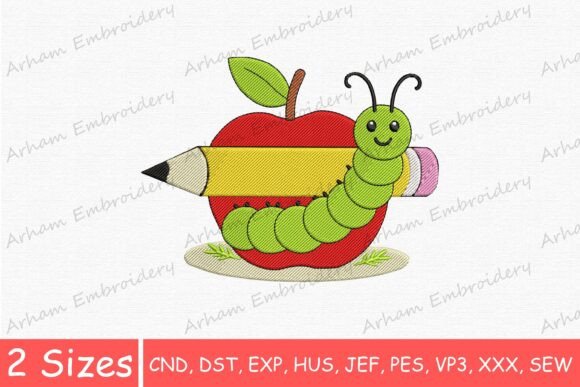
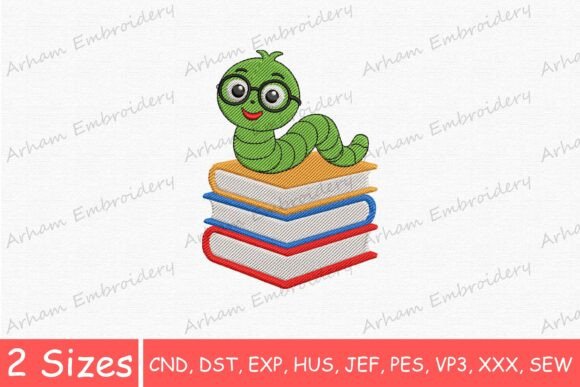
When Cute Caterpillar Reading Book popped up in my design queue, I paused—not because it’s flashy, but because it’s quietly confident. It doesn’t shout; it smiles. The caterpillar curls around the book with soft, rounded curves—no sharp angles, no frantic energy. Its posture feels intentional, calm, and just a little proud. This isn’t a cartoon mascot or a hyper-stylized character; it’s a gentle visual pause in a busy world. As a designer who regularly selects embroidery files for nursery decor, baby onesies, and boutique gift items, I immediately saw its home: on a linen tea towel folded beside a storytime basket, stitched onto the chest of an organic cotton sweatshirt for a preschool teacher, or centered on a square patch sewn to a handmade tote bag labeled “My First Library.”
Where It Shines in Real Projects
I tested Cute Caterpillar Reading Book across three actual production scenarios: a custom-embroidered cotton apron for a children’s bookstore pop-up, a set of matching pillow covers for a Montessori-inspired nursery, and a batch of embroidered patches for a local literacy nonprofit’s volunteer kits. In each case, the design held up beautifully—not because it’s technically complex, but because its simplicity is deliberate and well-balanced.
- On apparel: It reads clearly at 3.5” wide on a sweatshirt front—no detail loss, no thread pooling. The book’s spine and caterpillar’s segmented body use clean satin stitch borders that define shape without heaviness. Running stitch accents (like tiny book lines or antennae) add texture without overloading the file.
- On home goods: On a medium-weight linen tea towel, the fill stitch areas stayed smooth and flat. No puckering—even without heavy stabilizer—thanks to moderate stitch density and open negative space around the caterpillar’s curl.
- As a patch: When stitched onto twill backing and heat-applied to denim jackets, the edges stayed crisp. The design’s compact footprint (no sprawling limbs or fine tendrils) makes it forgiving for cut-and-sew workflows common among craft businesses and Etsy sellers.
Where to Pause—and Why
This isn’t a one-size-fits-all embroidery file. Its charm depends on thoughtful placement and context. Here’s where I’d advise caution:
- Small hoop sizes under 4”: The book’s title isn’t lettered—it’s implied through shape and styling—so avoid shrinking it below 3”. Tiny versions lose warmth and become vague silhouettes.
- Stretchy or thin fabrics: While it stitches cleanly on stable knits, I’d skip it on lightweight jersey or single-layer muslin unless paired with tear-away + cut-away stabilizer combo. The caterpillar’s curved body can distort if fabric shifts mid-stitch.
- Dark or textured backgrounds: On charcoal terry cloth or heavily napped fleece, the subtle dimension of the satin-stitched book cover softened. Test thread colors first—cream or heather gray thread often reads better than stark white on deep backgrounds.
- Curved surfaces like caps: It works best on structured front panels—not the crown or curve of a low-profile cap. The design’s horizontal orientation and gentle arc don’t adapt well to severe curvature without re-digitizing.
What It Adds to Your Handmade Product—Beyond Stitching
Using Cute Caterpillar Reading Book isn’t just about placing a design—it’s about reinforcing intention. For small shop owners and Etsy sellers, this embroidery file signals care, literacy, and quiet joy. Customers notice that. A baby onesie with this design feels more considered than a generic animal motif. A personalized gift with it—say, stitched beside a child’s name on a quilt label—carries emotional weight. It elevates perceived value without demanding premium pricing. And because it avoids trends (no glitter effects, no neon gradients), it stays relevant across seasons and customer age groups—from newborn nurseries to kindergarten graduation gifts.
For craft businesses building brand consistency, it fits seamlessly into a “thoughtful childhood” aesthetic—pairing naturally with muted palettes, natural fibers, and minimal packaging. It doesn’t compete with your voice; it supports it.
Practical Notes Every Embroidery Designer Should Run Through
Before committing to Cute Caterpillar Reading Book in your next project, do these five things:
- Stitch a test on scrap fabric matching your final substrate—especially if using textured weaves or blends.
- Check thread color contrast in both natural and artificial light. Some pale greens or yellows fade into ecru linen if not carefully chosen.
- Review stitch density visually in your editing software—if fill areas look overly dense or sparse, adjust underlay or reduce max stitch length slightly.
- Confirm hoop size compatibility. Most versions will fit a 4x4 hoop comfortably, but verify before hooping expensive fabric.
- Inspect small details: antennae tips, book corner folds, and caterpillar leg definition. If those read cleanly in your test, you’re good to go.
Also—don’t skip the licensing check. If you plan to sell finished products (like embroidered tote bags or baby blankets) or resell digital embroidery files, confirm whether Cute Caterpillar Reading Book is cleared for commercial embroidery use. Many designers assume “personal use only” applies unless stated otherwise.
Final Thought: A Design That Breathes With You
Cute Caterpillar Reading Book won’t dominate a collection—but it’ll anchor it. It’s the kind of embroidery file that earns repeat use because it’s reliable, emotionally resonant, and quietly versatile. It doesn’t ask for attention; it earns it. Whether you’re stitching for a client’s nursery refresh, prepping holiday inventory for your small shop, or designing a printable mockup for your Etsy listing, this design delivers clarity, charm, and craft integrity—without overpromising. That’s rare. And worth keeping close.