Crayon Back to School
A Bright, Playful Anchor for Your Craft Fair Booth
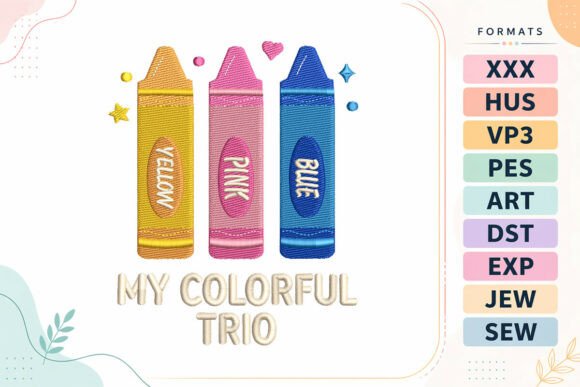
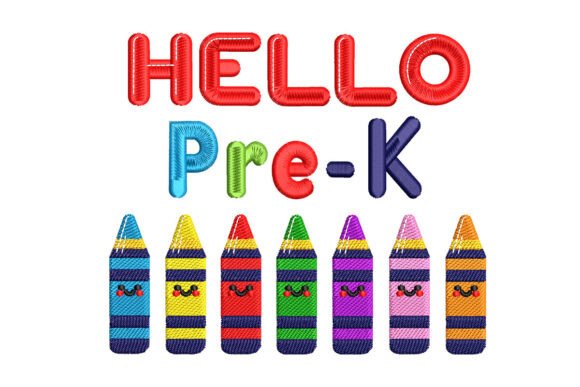
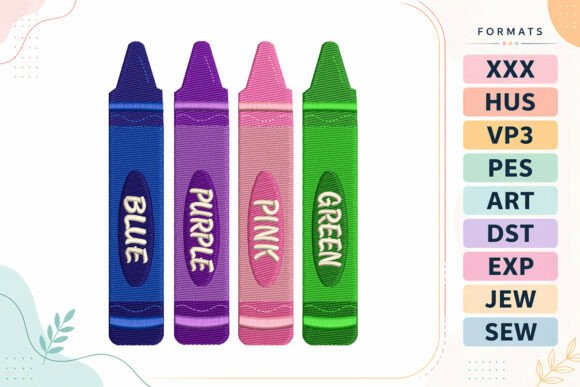
As an embroidery designer who’s packed, stitched, and sold at over 47 craft fairs—and watched real customers pause, point, and reach for items—I’ll tell you straight: Crayon Back to School lands with instant visual warmth. It’s not elegant or rustic—it’s boldly playful, with that clean, confident layout of four crayons (blue, purple, pink, green) that reads as both nostalgic and refreshingly modern. No cutesy fonts, no cluttered borders—just saturated color, balanced spacing, and a cheerful sense of order. That’s gold at a busy market where attention spans are measured in seconds.
Where It Shines: Real Products, Real Buyers
On a cotton tote bag? Perfect. The crayons scale beautifully as a centered chest design or a subtle side accent—especially on natural canvas or light denim. Customers love it because it says “school spirit” without shouting; it feels handmade, not mass-produced.
For aprons—especially those worn by teachers, homeschoolers, or makers—it adds personality without overwhelming the garment. Pair it with a small embroidered name tag below, and you’ve got a personalized, giftable small shop product.
Tea towel embroidery? Yes—but choose smooth, tightly woven linen or cotton. Avoid heavy terry or looped textures: the clean lines of Crayon Back to School need clarity, not fuzz. On a folded towel display, it catches eyes from six feet away thanks to its vibrant thread colors and high-contrast arrangement.
Embroidered patches are where this design truly excels. Its compact shape, consistent stitch density, and lack of fine gradients make it ideal for iron-on or sew-on patches. Craft fair shoppers grab these to personalize backpacks, denim jackets, or lunchboxes—and they’re easy to batch-produce with minimal rehooping.
Small fabric pouches and pillow covers benefit from its cheerful symmetry. At 3–4 inches wide, it holds impact without crowding. Caps? Use caution—only on structured front panels with firm stabilizer. Curved surfaces can distort thin crayon tips if hoop tension or digitizing isn’t optimized.
What Makes It Sell—And What Requires Care
Crayon Back to School works instantly at a glance. No decoding needed. That’s critical when buyers scan your booth while holding a toddler and a coffee cup. It’s recognizable as “school,” “fun,” and “handmade” in under two seconds—no context required.
It scales well: as a 2-inch focal point on a keychain or as a 5-inch statement on a market bag. But here’s the practical note—do not shrink it below 1.75 inches. Tiny crayon tips and tight color transitions may blur or stitch poorly on dense fabrics or dark backgrounds. Always test the embroidery file on scrap fabric matching your final product’s weight and texture.
Photographing it for Etsy listings? It performs strongly. The saturated thread colors pop against neutral backdrops, and its clean edges minimize editing time. For printable mockups, use flat-lay shots with real school supplies nearby—pencils, notebooks, erasers—to reinforce theme and usage without words.
Production Notes Every Embroidery Designer Should Check
- Stabilizer matters. Use medium-weight cutaway for knits or stretchy totes; tear-away for stable linens and tea towels. Skip lightweight fusible if stitching on textured fabric—it won’t hold crisp detail.
- Thread contrast is non-negotiable. Test blue, purple, pink, and green threads on your base fabric. A pale lavender may vanish on heather gray; a bright green can vibrate oddly on yellow canvas. Adjust thread colors before bulk production.
- Review spacing and stitch density. Four crayons close together risk dense stitching in the center. If your machine hesitates or threads break mid-design, check for overlapping satin columns or overly tight fill areas—contact the digitizer if you own the commercial embroidery license.
- Hoop size and placement affect flow. Confirm the design fits comfortably within your standard hoop—ideally leaving ½ inch margin. This prevents shifting on large runs and keeps your booth setup efficient.
- Create one real mockup before selling. Not digital. Not printed. Stitch it, press it, hang it on your display rack. See how light hits the thread. Watch how it looks next to your other Back To School designs. Does it stand out—or blend in?
Why It Strengthens Your Brand & Booth Presence
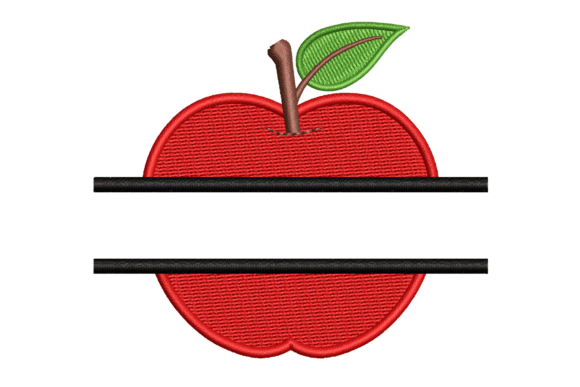
Crayon Back to School elevates perceived value—not through complexity, but through intentional joy. It signals craftsmanship (clean alignment, balanced color), approachability (no jargon, no irony), and relevance (timely, seasonal, but not dated). When grouped with other machine embroidery design offerings—like apple motifs or chalkboard quotes—it creates a cohesive, trustworthy handmade product story.
In your booth, place it on three tactile formats: a soft pillow cover, a sturdy tote, and a ready-to-gift patch tin. That variety invites touch, comparison, and cross-selling. Buyers don’t just buy a design—they buy a feeling (“my kid will love this”), a memory (“I had these crayons!”), and confidence (“this was made with care”).
For Etsy sellers and digital sellers: bundle Crayon Back to School with coordinating design assets—like a simple “First Day” script or a pencil icon. It increases average order value and reinforces your shop as a go-to for Back To School embroidery solutions.
Last-Minute Must-Dos Before Market Day
- Verify commercial licensing status—don’t assume personal-use files are cleared for resale of finished products.
- Compare thread colors across fabric swatches: same thread, different base = different perception.
- Run one full test on your most common product (e.g., a 100% cotton tote) and inspect for puckering, skipped stitches, or thread breaks.
- Ensure all packaging—tags, stickers, poly bags—uses consistent color language (pull from the crayon palette).
- Have at least one finished item on display with a handwritten price tag. Real objects sell faster than signs.
Crayon Back to School isn’t just another digital embroidery file. It’s a conversation starter, a repeatable bestseller, and a quiet confidence-builder for your craft fair product lineup—if treated with thoughtful execution. Stitch it right, show it boldly, and watch it color your sales.